0 item(s)
View cart
You have no items in your shopping cart.

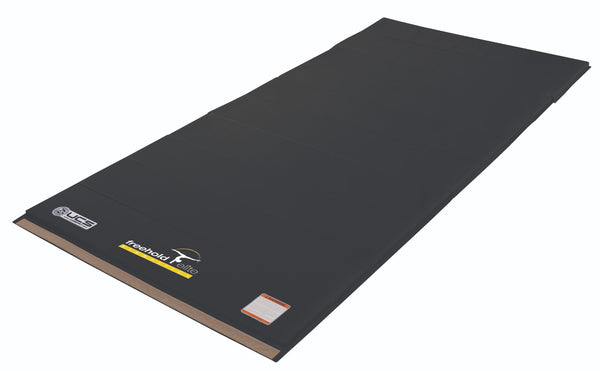
Color: Black
Custom logo application available for additional charge.
Thickness: 1 3/8"
Sizes:
4' x 4' - Velcro 2 Sides - 140-44V2-ST
4' x 6' - Velcro 2 Sides - 140-46V2-ST
4' x 8' - Velcro 2 Sides - 140-48V2-ST
5' x 10' - Velcro 2 Sides - 140-50V2-ST
6' x 12' - Velcro 2 Sides - 140-62V2-ST
4' x 4' - Velcro 4 Sides - 140-44V4-ST
4' x 6' - Velcro 4 Sides - 140-46V4-ST
4' x 8' - Velcro 4 Sides - 140-48V4-ST
5' x 10' - Velcro 4 Sides - 140-50V4-ST
6' x 12' - Velcro 4 Sides - 140-62V4-ST
The performance of a mat is defined by its internal composition and external durability. At our North Carolina facility, we prioritize engineering that balances takeoff firmness with landing safety. We use a multi-panel mat design that allows seamless integration into any training lane while maintaining the structural integrity required for high-velocity movements.
Whether you are outfitting a primary school PE space or a high-level competitive program, having the correct mat thickness options is vital for safety. We offer a wide selection of foam mats designed to scale with the difficulty of the stunts being performed. For younger participants, we often recommend pairing these with our soft play equipment to build foundational motor skills.
Our multi-panel gym mats are a staple in versatile training setups because they can be easily reconfigured. Beginners practicing backward skills or new aerials benefit from thicker landing mats that offer deeper compression. For more advanced tumbling passes, longer, firmer sections allow for a continuous flow that mimics competition floors. Programs that require rapid reconfiguration between classes benefit our lightweight gymnastics mats.
Choosing the right gymnastics equipment requires an understanding of the specific impact levels your athletes will encounter. While exercise mats may suffice for basic floor work, stunt training demands specialized stunt & skill mats that won't bottom out. In high-traffic facilities, some programs integrate these surfaces with as subfloor of rubber roll matting to provide an extra layer of vibration dampening and floor protection.
When selecting your mats, consider:
UCS always offers inclusive solutions, which is why our technology also powers our specialized therapy mats and adaptive equipment. We control every step of the manufacturing process at our American factory making sure that every athlete, regardless of skill level, trains on the safest surface possible.